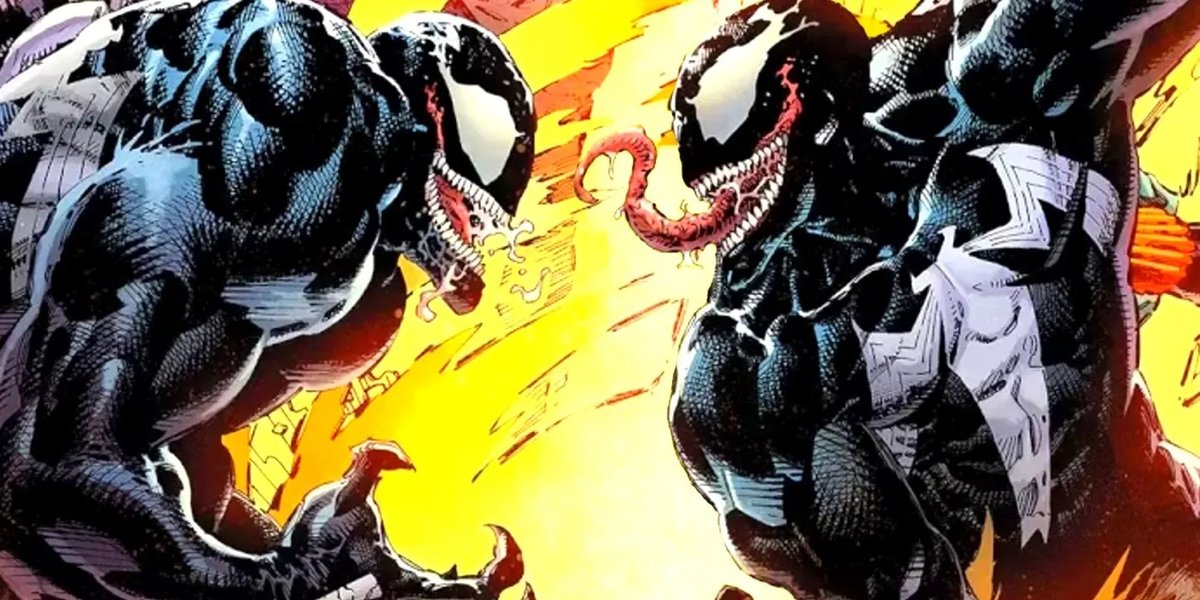
Few characters in the Marvel pantheon embody the thrilling complexity of good and evil quite like Venom. Once a terrifying antagonist, the amorphous alien symbiote and its various hosts have carved a unique path, pushing the boundaries of morality and evolving from pure villainy to a nuanced anti-hero. Understanding Venom's journey is to truly grasp the dynamic nature of comic book storytelling, detailing the intricate Venom Lore & Canon Evolutions that have shaped one of Marvel's most fascinating figures.
Imagine a creature born of resentment, bound by a profound sense of injustice, yet capable of extraordinary acts of protection. That's Venom in a nutshell: a character that constantly challenges our perception of heroism and villainy, leaving an indelible mark on readers for decades.
At a Glance: The Symbiote Saga
- Birth of the Black Suit: The symbiote first appeared as Spider-Man's sleek new costume in the mid-1980s.
- Eddie Brock's Rage: Disgraced journalist Eddie Brock became the first and most iconic host, fueling Venom's initial villainous identity.
- The Lethal Protector: A pivotal shift in the 1990s saw Venom relocate to San Francisco, becoming a violent protector, marking his anti-hero turn.
- A Multitude of Hosts: Beyond Brock, the symbiote bonded with diverse individuals like Mac Gargan (the Scorpion) and Flash Thompson (Agent Venom), each defining a new era for the character.
- Modern Day Return: Eddie Brock's latest run has revitalized Venom, blending classic horror with deeper mythological themes.
- Enduring Appeal: Venom's complexity, adaptability, and themes of struggle and redemption ensure his lasting popularity across comics and media.
The Genesis of a Marvel Icon: From Black Suit to Venom
Every legend has an origin, and Venom's began not with a dark ritual, but with a fan letter. In the mid-1980s, Randy Schueller, a reader with a keen eye for character design, proposed a new black suit for Spider-Man. Marvel, recognizing a brilliant idea, purchased it for a mere $220. Little did anyone know, this sleek, shadowy design would lay the groundwork for a character that would haunt Peter Parker's dreams and eventually become a fan favorite in his own right.
The alien symbiote made its official debut not as a villain, but as Spider-Man's technologically advanced (or so he thought) new uniform in the landmark "Secret Wars" limited series (1984-1985), and concurrently in "The Amazing Spider-Man" #252 (1984). Peter Parker loved the suit's enhanced abilities and seemingly limitless web-generating capacity. However, as lore would reveal, the suit itself was alive, an entity with its own consciousness, attempting to permanently bond with and even control Peter. Spider-Man eventually rejected it, feeling its parasitic nature and discovering its vulnerability to high-frequency sounds.
This rejection was a critical moment. The symbiote, having bonded deeply with Peter, experienced its own form of heartbreak and rage. It found a kindred spirit in Eddie Brock, a disgraced journalist who held an intense, burning hatred for Spider-Man after his career was ruined by one of Spidey's investigations. This potent cocktail of alien resentment and human vengeance created Venom, a name that would strike fear into the hearts of Marvel readers.
Eddie Brock: The Quintessential Host and Formidable Foe
With "The Amazing Spider-Man" #300 in 1988, writer David Michelinie and legendary artists Todd McFarlane and Mike Zeck officially unleashed Venom. Eddie Brock wasn't just wearing the symbiote; he was Venom. The bond was symbiotic in the darkest sense, with both entities feeding off their shared animosity toward Spider-Man. Eddie’s knowledge of Peter Parker’s secret identity, combined with the symbiote’s mimicry of Spider-Man’s powers, made him Spider-Man's perfect dark reflection – faster, stronger, and immune to the Wall-Crawler's spider-sense.
Early Venom was, by all accounts, terrifying. McFarlane's iconic design—hulking physique, menacing grin, and elongated tongue—solidified his status as a truly formidable and horrifying villain. He was a force of nature, driven by singular revenge, and initially, there was no moral ambiguity; Venom existed purely to torment and destroy Spider-Man. This early iteration cemented Venom as a primal, visceral threat, setting the stage for his intricate Venom Lore & Canon Evolutions.
Shifting Tides: Venom's Anti-Hero Evolution
While Venom's initial impact was as a pure villain, the character's sheer popularity and the potential for deeper storytelling quickly pushed him beyond a one-note antagonist. The real turning point in Venom's moral compass, and a pivotal moment in the Venom Lore & Canon Evolutions, arrived with the 1993 limited series, "Venom: Lethal Protector."
In this landmark series, Venom, with Eddie Brock still at the helm, relocated to San Francisco. Here, a truce of sorts was forged with Spider-Man, though it was always tenuous. Venom's purpose began to shift: instead of hunting Spider-Man, he became a "protector" of the innocent, albeit through intensely violent and often lethal means. He wasn't a hero in the traditional sense; he was a brutal vigilante, willing to dispatch criminals with extreme prejudice, believing he was delivering a twisted form of justice.
This period also saw further evolution in Venom's visual design, making him less a simple dark reflection of Spider-Man and more of a distinct, monstrous entity. His infamous tongue became a more prominent feature, his teeth sharper, and his eyes more jagged and feral. These design changes reinforced his unique identity and his growing separation from his Spider-Man origins.
Key storylines further solidified this moral ambiguity. "Maximum Carnage," for instance, saw Venom reluctantly team up with Spider-Man and other heroes against his own murderous offspring, Carnage. This unlikely alliance showcased Venom's willingness to fight for a greater (if still violent) good when faced with an even worse threat. Later, "Planet of the Symbiotes" offered a deeper dive into the symbiote's origins and psychology, revealing a crucial trait: unlike many of its brethren, Venom actually sought to bond with its host rather than dominate it, hinting at a capacity for companionship and even loyalty that underscored its anti-heroic turn. This was a critical revelation that would influence future interpretations of the character, paving the way for further exploration into what it means to be Venom.
Beyond Brock: A Multitude of Hosts, A Kaleidoscope of Venom
The beauty of the Venom symbiote lies in its ability to adapt and bond with different hosts, each bringing a unique personality and moral framework to the creature. While Eddie Brock remains the most iconic, other individuals have worn the black suit, each shaping the Venom Lore & Canon Evolutions in profound ways.
Mac Gargan (The Scorpion): The Monstrous Return to Villainy
In the early 2000s, the Venom symbiote found a new, darker partner: Mac Gargan, better known as the villainous Scorpion. This era marked a sharp departure from the "Lethal Protector" days, thrusting Venom back into a purely villainous role. Gargan's inherent sadism and lack of moral compass merged with the symbiote to create a truly monstrous iteration.
As part of Norman Osborn's Dark Avengers and later the Thunderbolts, Gargan's Venom was depicted with overt horror elements. The infamous "The Hunger" storyline, for example, saw this Venom literally eating people's brains, leaning heavily into the creature's predatory instincts. Visually, this Venom became larger, more beast-like, with smaller, crazed eyes peeking out from within the classic white eye shapes, signifying a loss of control and a shift towards an even more terrifying, uncontrolled monster. This period reminded readers that despite its anti-heroic past, the symbiote still harbored immense destructive potential.
Flash Thompson (Agent Venom): The Heroic Symbiote Soldier
Perhaps the most surprising and radical evolution came in the 2010s with the introduction of Flash Thompson as Agent Venom. Flash, originally Peter Parker's high school bully, had grown into a decorated war veteran who tragically became a double amputee. Struggling with alcoholism and PTSD, Flash was chosen for a top-secret government program, tasked with bonding with the symbiote to become a super-soldier.
This iteration positioned Venom as a genuine hero and even an Avenger. Flash, with his military discipline and strong moral compass, brought an unprecedented level of control and heroism to the symbiote. His primary mission was to avoid killing unless absolutely necessary, a stark contrast to previous hosts. This period explored themes of personal responsibility, addiction, and redemption through a unique lens, showing the symbiote's potential for good when guided by a truly noble spirit. Agent Venom's tenure was a significant expansion of the Venom Lore & Canon Evolutions, proving the symbiote wasn't inherently evil, but a reflection of its host.
Eddie Brock's Modern Reign: A Rejuvenated Classic
After various hosts and storylines, the Venom symbiote eventually returned to its most iconic partner: Eddie Brock. However, this wasn't a mere reset. The character, and Eddie himself, had evolved significantly. The current run sees Venom return to his classic, hulking look, but Eddie's personal morals have shifted, reflecting the growth from his "Lethal Protector" days. He actively strives to avoid killing, wrestling with the symbiote's more primal urges.
This contemporary era has delved deep into the horror roots of the symbiote, often venturing into cosmic, eldritch territory. The introduction of Knull, an ancient, malevolent cosmic entity and the progenitor of the symbiotes, has expanded Venom's mythology exponentially. These storylines explore the symbiote's connection to a larger, darker universe, rejuvenating the character with fresh, high-stakes narratives that blend horror, action, and profound character development. It’s an exciting time to Explore the all new Venom and see where this complex dynamic takes us next.
Venom in Other Media: From Page to Screen
Venom's compelling character has naturally transcended the comic book pages, finding life in various adaptations that have further cemented his status as a pop culture icon. Each adaptation brings its own interpretation, adding new dimensions to the character's legacy and influencing public perception of the Venom Lore & Canon Evolutions.
In animated series, Venom made memorable appearances, often as a formidable adversary for Spider-Man. "Spider-Man: The Animated Series" in the 1990s introduced a generation to the terrifying fusion of Eddie Brock and the symbiote, portraying him as a relentless and visually imposing threat. Later, "The Spectacular Spider-Man" offered a more streamlined and equally impactful origin story, highlighting the symbiote's parasitic nature and the tragic genesis of Venom.
The leap to live-action film has had a more varied reception. Topher Grace portrayed Eddie Brock/Venom in Sam Raimi's "Spider-Man 3" (2007). This rendition, while divisive among fans for its departure from comic accuracy, still presented the core elements of the symbiote's hatred for Spider-Man and its bond with a vengeful host.
More recently, Tom Hardy has taken on the role of Eddie Brock in "Venom" (2018) and its sequel, "Venom: Let There Be Carnage" (2021). These films leaned heavily into the anti-hero dynamic and even explored a unique, often comedic, odd-couple relationship between Eddie and the symbiote. Hardy's portrayal captured the internal struggle and the symbiote's alien charm, bringing a new, distinct flavor to the character that resonated with a wide audience and opened up new possibilities for the Venom Lore & Canon Evolutions in a cinematic universe.
Why Venom Endures: The Symbiote's Universal Appeal
Venom’s enduring popularity isn’t just about cool powers or a menacing design; it’s rooted in his complex nature and the universal themes he embodies. The symbiote saga delves into questions of identity, control, and the blurry lines between right and wrong—themes that resonate deeply with readers and viewers alike.
At its core, Venom represents the duality of humanity: the struggle between our best intentions and our baser instincts. Whether it's Eddie Brock wrestling with his rage, Flash Thompson battling his personal demons while harnessing immense power, or the symbiote itself seeking connection amidst its destructive urges, the character always presents a layered conflict. This struggle for control, for redemption, and for finding a place in the world despite being an outcast, gives Venom a profound relatability.
Furthermore, Venom's adaptability is a testament to the strength of his concept. He can be a terrifying monster, a brutal vigilante, or a heroic soldier, shifting roles to reflect broader trends in comic book storytelling. This willingness to evolve and explore nuanced narratives—moving beyond simple good vs. evil—has kept the character fresh and relevant for decades. He challenges us to look beyond the surface, to understand the motivations behind monstrous actions, and to question what truly defines a hero.
Unmasking the Future: What's Next for the Symbiote?
The journey of Venom, from a rejected alien costume to a celebrated anti-hero and cosmic entity, is a vibrant tapestry woven through the history of Marvel Comics. The character’s evolution mirrors the maturation of comic book narratives themselves, moving from clear-cut heroes and villains to characters riddled with moral complexity and internal conflict.
So, what lies ahead for Venom and his ever-changing hosts? As current storylines delve deeper into the cosmic horror elements introduced by Knull and explore the vast history of the symbiote species, the possibilities are virtually limitless. We can expect more profound explorations of the symbiote's sentience, its connection to the Klyntar homeworld, and its ongoing relationship with humanity.
Whether Venom is protecting the innocent with savage force, struggling against its own predatory nature, or navigating the complexities of fatherhood (as some recent arcs suggest), one thing remains certain: the character will continue to surprise, challenge, and entertain. Venom is more than just a character; he's a testament to the enduring power of storytelling, constantly redefining what it means to be a hero, a villain, or something wonderfully, terrifyingly in-between. Keep an eye on this multifaceted icon; the next chapter in the Venom Lore & Canon Evolutions is always just around the corner.